
New Research: Disadvantaged Neighbourhoods Have Stronger Social Cohesion Than Other Residential Areas
Although disadvantaged neighbourhoods have become a highly charged political issue, residents’ own experiences have not been systematically mapped. A Nordic study shows that residents feel just as strong a sense of national belonging as other population groups, but experience stigma associated with their home address.
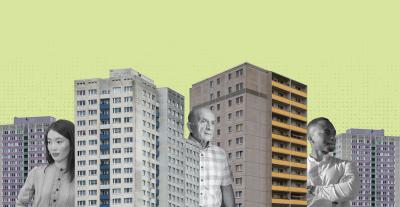
The research project “The Future of Diverse and Disadvantaged Neighborhoods in the Nordic Welfare States – The Voices of Residents” sought to give residents of disadvantaged neighbourhoods a voice in public debate. Researchers from four Nordic universities interviewed people in six stigmatized urban districts in Sweden, Denmark and Finland. These neighbourhoods are characterized by a high proportion of residents with low socioeconomic status and a high proportion of immigrants.
Residents in the surveyed neighbourhoods reported that their area faces many serious social problems and has a poor reputation. This is where their experiences differ most clearly from those of the general population. At the same time, levels of satisfaction with their neighbourhoods are relatively high and not significantly different from those reported by the wider population. When it comes to a sense of belonging to the country in which they live, no differences were found at all.
“There is sometimes concern about social cohesion within Sweden, but our study shows that there is no basis for that concern,” says principal investigator Jacob Sohlberg, Associate Professor at the University of Gothenburg.
“When it comes to social contacts, disadvantaged neighbourhoods stand out in a positive way. People living in these areas are more likely to have close friends within their neighbourhood.”

Nearly 5,000 People Interviewed
Researchers and trained interviewers conducted door-to-door interviews in randomly selected apartment buildings. They also spent time in public spaces to reach groups that spend more time outside, such as young men. This approach enabled the researchers to engage population groups that typically do not respond to questionnaires.
“Through extensive fieldwork, we have been able to reach people whose voices are rarely heard,” says Jacob Sohlberg.
The researchers examined how residents perceive their living conditions and their relationship with the rest of society, compared with the population at large.
The survey was conducted in the districts of Biskopsgården and Hammarkullen in Gothenburg, Sweden; Herredsvang and Gellerup in Aarhus, Denmark; and Kontula and Koivukylä in the Helsinki and Vantaa region of Finland. In total, approximately 4,800 people were interviewed.
Alcohol and Drug Abuse Create Insecurity
Although residents in disadvantaged areas across all the countries surveyed perceive social disorder as a problem, Finland stands out negatively on this issue. Researcher Oskar Rönnberg notes that 40 per cent of residents in Koivukylä said they would like to move within the next two to three years, compared with 20–30 per cent of residents in most other areas included in the study.
“The main reason was that residents felt unsafe because of problems related to social disorder,” says Oskar Rönnberg.
These problems include alcohol and drug abuse, as well as drug dealing within the neighbourhood.
“What should cities do to reverse this trend? The issue here is not primarily ethnic segregation or immigration, but rather social welfare and how society should address the fact that some people have fallen through the social safety net,” says Rönnberg.

Different Living Conditions Within the Same Country
The comparative study shows that residents of disadvantaged neighbourhoods in all three Nordic countries perceive their circumstances as being more similar to those of residents in comparable areas abroad than to those of people living in non-disadvantaged neighbourhoods within their own country. For example, a resident of a disadvantaged area in Denmark shares many of the same experiences as someone living in a similar area in Sweden or Finland. These similarities are more pronounced than those between a disadvantaged and a non-disadvantaged neighbourhood within the same country.
“It is dramatic that such different living conditions have been created within the same country, or even within the same city,” says Sohlberg.
More information about the methodology can be found in Sociological Methods and Research, and more about differences between disadvantaged neighbourhoods in Political Geography.
Further Information
Jacob Sohlberg
Senior lecturter, University of Gothenburg
+46 70 594 13 18
jacob.sohlberg@gu.se
Oskar Rönnberg
Researcher in Urban Geography, University of Helsinki
+358 40 531 0893